
7 Decluttering Tips for Families Who Can't Bear to Throw Anything Away
Updated: Sep 21
You're mid-toss, one hand hovering over the recycling bin, when you hear it: "Wait, that's mine!" A kid always seems to materialize at the exact second a curling, three-year-old finger painting is about to disappear for good.
Decluttering is easy when it's expired coupons and dead batteries. It's a different project entirely when you're trying to declutter sentimental items, the ones with a face attached to them, a handwriting you recognize, a date you remember. These 7 decluttering tips are for families who want a cleaner home without losing the memories that filled it.
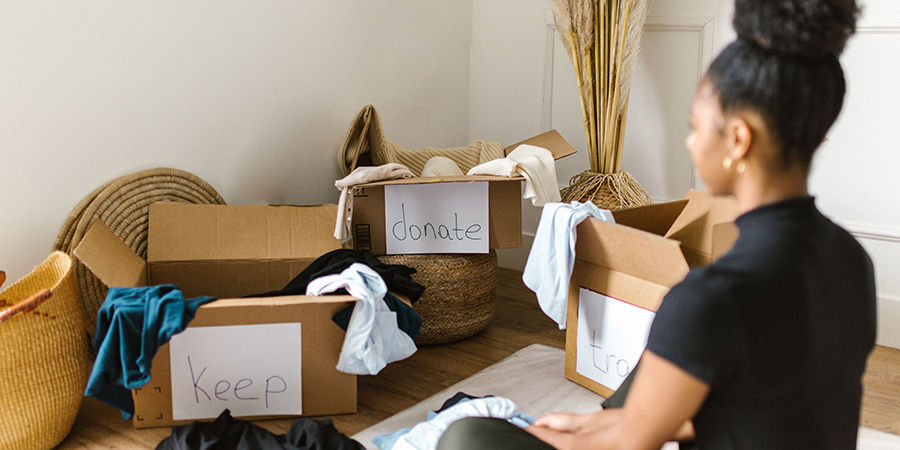
1. Start With Sentimental Items, Not Your Junk Drawer
Most decluttering advice tells you to leave sentimental items for last. Save the hard stuff until you've built momentum, the thinking goes. The problem: most families never get there. The junk drawer gets cleared, the pantry gets reorganized, and the box of kids' drawings quietly rolls over to next year, then the year after that, until it's a storage unit problem waiting to happen.
Try flipping it. Starting with sentimental categories, such as photos, artwork, cards, and mementos, actually makes the rest of the process easier. Once you've worked through the emotionally loaded stuff, a closet full of old clothes feels manageable by comparison.
The key mindset shift: you don't have to choose between the memory and the space. Preserving something doesn't always mean keeping the physical original.

2. Digitize Family Photos Before They Fade
Physical prints degrade over time. Colors soften, details blur, and an album that looked fine a few years ago can be surprisingly faded when you pull it out again. Decluttering the photo drawer is a good reason to finally tackle this.
A photo digitizing service like Photokive handles the heavy lifting. You ship your loose prints and intact albums; they photograph everything at high resolution and return your digital files. You can also turn those images into a photo book, one of the most personal gifts you can give a parent or grandparent, especially one who may not know the originals even existed.
Once your family photos are digitized, deciding what to do with the physical prints becomes a different kind of decision. You're keeping the image. What you do with a worn, faded print is a much easier question to answer.

3. Turn Your Kids' Artwork Into a Memory Book
For parents of young artists, children's artwork accumulates faster than almost anything else. A full school year of paintings, drawings, collages, and clay figures adds up to a collection that's hard to store and even harder to part with. Your child made those. They matter. The good news: you don't have to keep every piece to honor every piece.
Start by gathering artwork from the past year and choosing your favorites, the ones that show a growth leap, a funny moment, or something that just makes you smile. Then send them in with an Artkive Box. Artkive professionally photographs each piece and designs a hardcover memory book you'll actually take off the shelf. Every order also includes digital files of each piece, so you can share them with grandparents or gift additional books.
"Having a clutter-free home is really important to our family. ARTKIVE helps us fulfill our clutter-free goal by turning our littles' artwork into beautiful keepsakes that take up little space and last a lifetime." ~ Haley B.

4. Give Greeting Cards a Home Instead of a Drawer
Greeting cards are the slow creep of the sentimental world. One birthday card becomes a stack. The stack becomes a drawer. A decade later, you're still not sure what to do with any of it, but you also can't bring yourself to toss a card your grandmother wrote in her own handwriting.
If you're someone who holds onto handwritten notes and signed cards, you don't have to choose between the sentiment and the space. The answer isn't a bigger drawer.
Cardkive turns your card collection into a card memory album, a keepsake you can actually flip through rather than a box you'll sort through someday. You send in what you've saved; they photograph and organize everything beautifully. Birthdays, holidays, milestone moments, all in one place, taking up a fraction of the space.

5. Build a Family Recipe Archive
Handwritten recipe cards sit in a strange category: too meaningful to throw away, too disorganized to actually use. If your family has a collection passed down from parents or grandparents, this project is worth the afternoon it takes.
The simplest path is to photograph each card yourself and save the images to a shared folder your whole family can access. If you want something more polished, Artkive customers have sent in recipe cards to be included in their memory books, arriving back as a printed, bound collection alongside photos and other keepsakes.
Either way, those recipes stop living in a box no one opens and start living somewhere your family can actually find them.
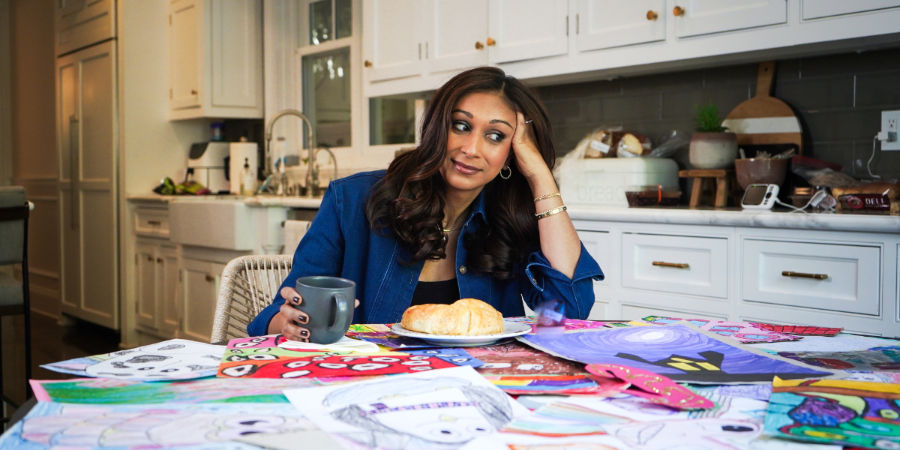
6. Use the "Best Of" Method for School Papers
School papers accumulate quietly and persistently. Tests, certificates, report cards, worksheets with a teacher's handwritten note. All of it arrives in waves throughout the year and tends to pile up in folders that never get revisited.
The "best of" method keeps this manageable. At the end of each school year, go through everything and choose one or two pieces that stand out; something that captures who your child was at that age. You don't need the full folder to tell the story of a year. You need the right two pieces from it.
Those selections can go into an Artkive book alongside their artwork. The rest can go. Looking for more ideas on what parents include in their Artkive books? See what families are saying.
Our Decluttering Tips Start With One Box

Most families don't avoid decluttering because they don't care. They avoid it because everything they're holding onto has a story. These 6 decluttering tips are built around that reality: you can have a cleaner, more organized home without letting go of the moments that made it feel like yours.
A single decluttering session doesn't stick, so build it into the rhythm of your year instead. Fall is a natural place to start, since the new school year is already sending home a fresh wave of artwork and papers, and the holidays aren't far behind with their own wave of photos, cards, and new craft kits.
A simple three-checkpoint cadence works for most families: end of school year, back-to-school, and fall before the holidays. Even an hour per checkpoint, room by room, adds up over the course of a year.
Start with one box. One drawer. One year's worth of kids' artwork. That's enough to begin, and the keepsakes you create along the way will be the one part of decluttering you're actually glad you did.
Whatever you're holding onto, whether it's artwork, photos, or cards, keep the memories without the clutter.
Frequently Asked Questions About Sentimental Decluttering
What should I declutter first?
Start with sentimental items instead of saving them for last. Photos, kids artwork, cards, and mementos carry the most emotional weight, and once you've sorted through those, everything else in the house feels easy by comparison.
How do I declutter without feeling guilty?
Remind yourself that keeping the memory doesn't require keeping every physical piece. Photograph or preserve the items that matter most to you, and let the guilt go along with the rest.
What should I do with kids' artwork I can't keep?
Choose your favorites, the ones that mark a growth spurt or just make you smile, and send the rest into a memory book instead of a closet bin. A service like Artkive professionally digitizes kids artwork, so you keep the image even when you don't keep the paper.
How often should families declutter?
A seasonal rhythm works well, tied to natural transitions like end of school year, back-to-school, and fall before the holidays. Three clear checkpoints a year keeps things from building up to the point where the project feels too big to start.


