
A Guilt-Free Guide to Organizing Your Kids' Artwork in 30 Minutes
Updated: 6 days ago
Every week something new comes home, and every week you tell yourself you'll deal with it later. Later keeps getting longer, and you're running out of counter space. But what if every piece of kids' art in your house had a plan you could execute by dinnertime?
Believe it or not, half an hour is just enough time to set up a routine for everything that comes home next. This 30-minute reset gives you a way to organize kids artwork now, so later stops being a problem.

Why Organizing Kids' Crafts Matters
Kids' arts and crafts are a snapshot of their creativity, growth, and personality. But keeping every piece makes home organization stressful. By the end of a school year, the pile is hard to ignore, and it gets harder to appreciate the truly special pieces.
Sorting your children's drawings helps you:
Preserve meaningful memories without drowning in paper
Create space for new creations without chaos
Build a manageable artwork archive that grows with your child
Reduce stress and guilt about throwing anything away
This reset isn't about tossing everything. It's about choosing what truly matters and setting up storage that works long term.

The 30-Minute Reset Plan for Kids' Artwork
Step 1: Gather All Artwork in One Spot (5 minutes)
Collect every piece of kids' art from around the house, one room at a time: the playroom, bedrooms, kitchen counter, and the spot by the back door. Check school folders, tote bags, and rolled-up pieces too. Include the 3D projects, like clay, papier-mache, and holiday crafts. Having everything in one place gives you a clear picture of what you're working with.
Step 2: Sort Into Three Piles (10 minutes)
Create three piles labeled:

Keep: Favorites that show milestones, creativity, or special memories
Digitize: Pieces you want to remember but don't need physical copies of
Recycle: Items that don't hold strong meaning or duplicates
If a piece makes you smile or your child still talks about it, it's a keeper. If you can't remember what it is, that tells you something too. No matter what, make a decision about it right away. Don't put anything back in the pile to sort later.
Be honest but kind to yourself. If the guilt is the hard part, read is it okay to throw away kids' artwork. You'll see that keeping all your piles isn't necessary to honor your child's creativity. There are plenty of ways to hold on to the sentiment while letting go of the clutter.
Step 3: Store the Keepers (10 minutes)
Use a designated kids' art box or a dedicated folder to store the keepers. A shallow storage bin per child works well, and an accordion folder suits flat pieces. Label it with your child's name and year for easy reference. For larger or 3D crafts, consider clear bins or display shelves.
For pieces too big to keep, take a photo and let them go. For more ways to store what you keep, see these kids artwork storage ideas.
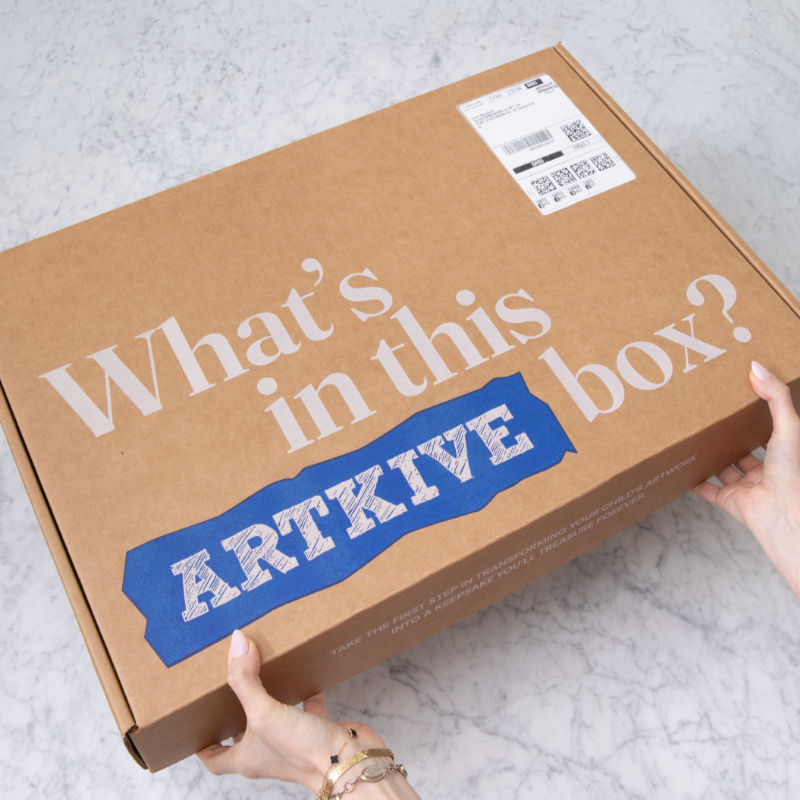
If you want to save kids artwork without the bins, check out Artkive's concierge box service. Artkive turns kids' arts and crafts into a beautiful memory book, and the service comes with a digital artwork archive you can revisit anytime.
Step 4: Set Up an Incoming Artwork Routine (5 minutes)
Keep the pile from building back up with a simple system for new creations:
Use a designated spot like a wall pocket, clipboard, or tray for incoming art
Schedule a weekly or monthly review to sort new pieces
Decide immediately what to sort into the keep box, digitize folder, or recycle bin
This routine keeps your home organized and your child's creativity celebrated.
Spring Cleaning? Run the Reset Once Per Room
If you're tackling the whole house this spring, treat each room as its own 30-minute reset. Start with the room where the most art lives, finish the four steps, and stop. Pick one room, one afternoon, or one shelf, and come back to the next one another day. Spring cleaning goes better in small rounds, and it is an easy way to organize kids artwork without giving up a whole weekend.

Kids Art Organization Ideas to Make It Easier
Turn favorite pieces into personalized keepsakes. Services like Artkive create lasting memory books and framed wall mosaics. (see more on this below)
Rotate displayed art regularly to keep your home fresh and celebrate different creations.
Keep a few art projects out on display, and swap them when new ones come home.
Label storage boxes by year or age to track progress and growth.
If the pile is mostly worksheets and report cards, see our guide to organizing school papers.
Involve your child in the process to teach them about decluttering and valuing their work.
Turn Keepers into a Lasting Memory Book
Once you've sorted and stored your child's artwork, think about turning the best pieces into a keepsake book. Artkive transforms kids' art into high-quality art books. It frees up space while creating something you and your child can enjoy for years.
Our friend Trish Johnson at Organized Chaos agrees. Check out her blog "8 Things You Can Toss, Guilt-Free!" where she recommends Artkive alongside other useful home decluttering tips.
If you'd rather turn kids art into a book than box it up, here are three ways to do it. An Artkive book is a good way to archive artwork without sacrificing space, time or sentiment.
Frequently Asked Questions: Organizing Kids' Artwork
How do I decide what kids’ artwork to keep vs. recycle (without feeling guilty)?
A simple way to make decisions fast is to look for meaning + variety, not quantity. Keep pieces that show:
Milestones (first name writing, new skills, big improvement)
Memories (holidays, trips, first day of school, funny stories)
One-of-a-kind creativity (unique ideas, favorite themes, big effort)
Recycle duplicates, quick scribbles you don’t feel attached to, and anything that’s already been digitized. Many families use Artkive to preserve their favorite “keepers” in a printed art book so the best pieces stay safe without living in piles.
How do I store bulky 3D crafts (and still keep my house organized)?
3D crafts are the hardest to store because they take up space fast. Try this:
Photograph it first (straight-on + one angled photo for depth)
Keep only a few “best of the best” 3D pieces in a small clear bin
Recycle the rest after you’ve saved the memory
If you prefer to entrust this kind of task to experts, Artkive's concierge service can help. Our team will professionally photograph and edit your kids' crafts so you can preserve them in a more organized, elegant way. Your curated collection can include in an Artkive book and digital archive.
What's the best way to store kids' artwork long-term?
For flat artwork, labeled art boxes or folders organized by year work well. For 3D pieces, clear bins with photos of the contents are helpful. Many families use Artkive to turn their favorites into a printed memory book, which eliminates physical storage entirely while preserving the pieces they love most.


